
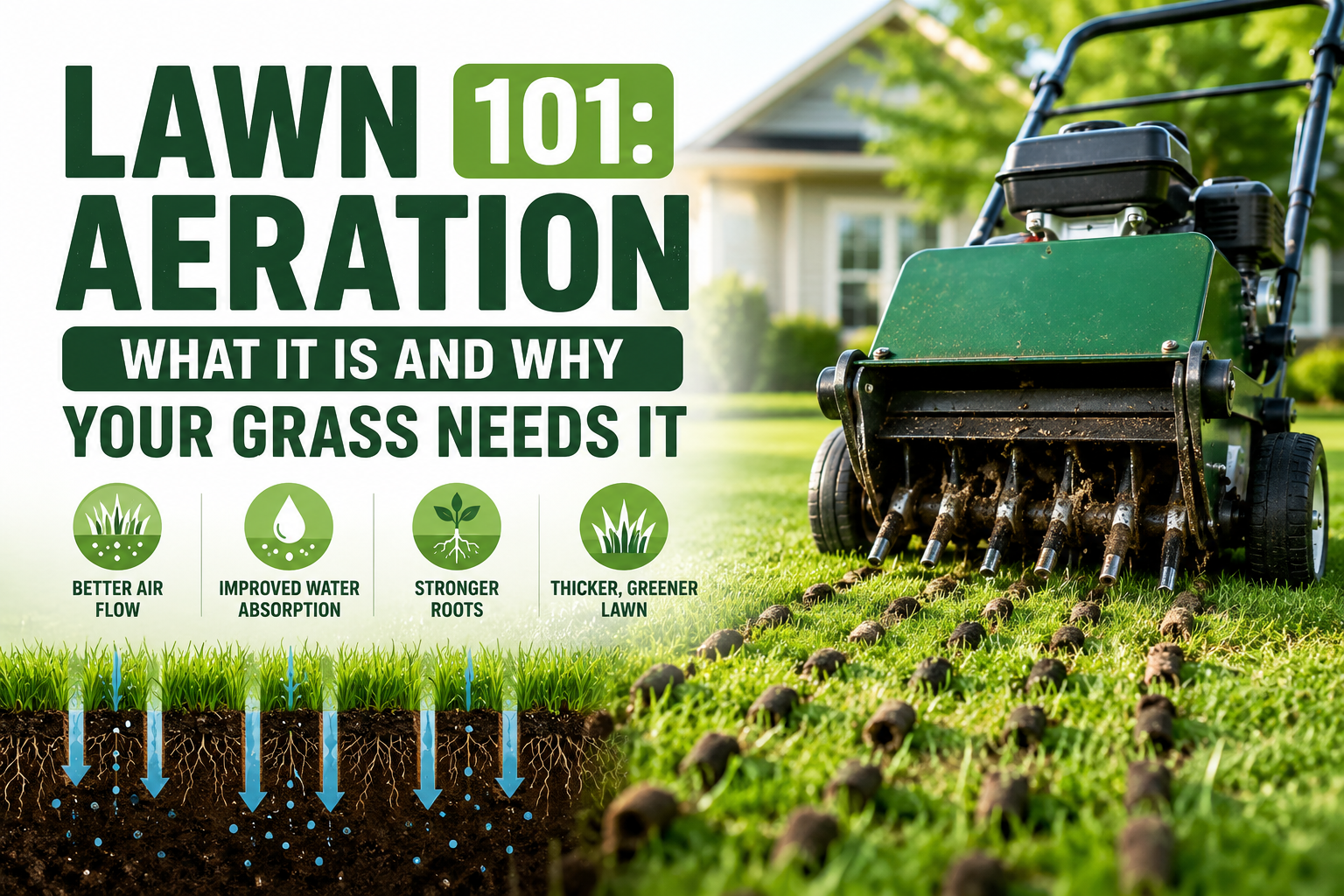
A thick, green lawn does not happen by accident. Even if you water, mow, and fertilize regularly, your grass can still struggle if the soil underneath is too compacted or choked with thatch. That is where lawn aeration comes in.
Lawn aeration is one of the simplest ways to help your grass grow deeper roots, use water more efficiently, and fill in thin or bare spots over time. If you have ever wondered why your neighbor's lawn looks healthier than yours, aeration might be part of the answer.
What Is Lawn Aeration?
Lawn aeration is the process of creating small holes in the soil so that air, water, and nutrients can reach the grass roots more easily. In most cases, this is done with a machine that either pokes holes or pulls out small plugs of soil across the yard.
There are two main types of aeration:
- Spike aeration: Uses solid tines or spikes to poke holes into the soil.
- Core (plug) aeration: Removes small plugs of soil and thatch, which is generally more effective for compacted lawns.
By opening up the soil, aeration gives roots room to grow and helps the lawn use water and fertilizer more efficiently. Professional lawn aeration uses core equipment for consistent, deeper plugs.
Why Your Lawn Needs Aeration
Over time, soil naturally becomes compacted from foot traffic, mowing, kids playing, and even heavy rain. When soil is packed too tightly, roots cannot spread, and water tends to sit on top rather than soaking in.
- Relieves soil compaction, giving roots space to grow.
- Improves water penetration, so moisture reaches deeper into the soil instead of pooling on the surface.
- Allows more oxygen and nutrients to reach the root zone, which supports stronger, thicker grass.
- Reduces thatch buildup, especially when combined with good lawn care practices.
The result, when combined with proper watering and fertilizing, is a lawn that looks greener, feels softer underfoot, and bounces back more quickly from stress.
Signs Your Lawn Could Benefit From Aeration
| Sign | What It Means |
|---|---|
| Thin or patchy grass | Compaction may be holding growth back despite regular care |
| Water pooling or runoff | Soil is too tight for moisture to soak in |
| Hard soil | A screwdriver is tough to push in, a classic compaction test |
| Heavy foot traffic | Kids, pets and gatherings compact soil faster |
| Thick thatch layer | More than about half an inch of spongy dead growth |
If you recognize any of these signs, your lawn will probably benefit from aeration.
When Should You Aerate Your Lawn?
The best time to aerate depends on the type of grass you have and your local climate.
- Cool-season grasses (Kentucky bluegrass, fescue, ryegrass) do best when aerated in early fall or early spring, when they are actively growing and can recover quickly. Most Southern Indiana lawns fall into this group.
- Warm-season grasses (bermuda, zoysia, St. Augustine) are typically aerated in late spring to early summer, during their peak growth period.
No matter the grass type, aerate when the soil is moist but not waterlogged, and when the lawn is not dormant so the grass can heal and fill in the holes. Spring aeration pairs well with the rest of your spring exterior cleaning checklist.
How Lawn Aeration Works: Step by Step
- Mow the lawn. Cut the grass to a normal height so the machine can move easily.
- Water before aerating. Water a day or two ahead, or aerate after a good rain, so the tines can penetrate. A tangle-free hose helps here, see how to roll up a garden hose without kinks.
- Mark obstacles. Flag sprinkler heads, shallow utility lines, and anything else to avoid.
- Run the aerator. Go over the lawn in one direction, then again perpendicular for better coverage.
- Leave the plugs. Core plugs break down naturally with rain and mowing, returning organic material to the lawn.
What to Do After Aeration
- Water the lawn thoroughly so roots take advantage of the improved soil access.
- Overseed thin areas. Aeration creates ideal seed-to-soil contact for new grass seed.
- Fertilize. A balanced fertilizer applied after aeration reaches deeper into the soil.
- Keep up regular mowing and avoid heavy traffic while the lawn recovers.
DIY vs. Professional Lawn Aeration
| Factor | DIY Aeration | Professional Aeration |
|---|---|---|
| Equipment | Rented core aerator | Commercial-grade, deeper and more consistent plugs |
| Effort | Transport, load and run a heavy machine | Handled for you |
| Best for | Small, lightly compacted lawns | Larger or heavily compacted yards |
| Extras | Research timing yourself | Guidance on timing, overseeding and follow-up care |
How Often Should You Aerate?
Most lawns benefit from aeration once a year, especially with regular use or heavier clay soils, which are common across Floyd and Clark County.
- Every year for high-traffic or compacted lawns.
- Every 2 to 3 years for lighter-use lawns with good soil structure.
If you notice recurring compaction or pooling water, more frequent aeration may help.
Frequently Asked Questions
Is core aeration better than spike aeration?
Yes, for most lawns. Core aeration removes plugs of soil and thatch, which actually relieves compaction. Spike aeration only pushes soil aside and can make compaction worse in dense clay soil.
Should I pick up the plugs after aerating?
No. Leave them on the surface. They break down within a couple of weeks with rain and mowing and return organic material and microbes to the lawn.
Can I overseed right after aeration?
Aeration is the best time to overseed. The open holes give seed direct contact with soil, which improves germination compared to broadcasting seed onto compacted ground.
How long does it take a lawn to recover from aeration?
Most lawns look normal again in 1 to 2 weeks during active growth. The holes fill in as the grass spreads and the plugs break down.
Final Thoughts: Why Lawn Aeration Is Worth It
Lawn aeration may not be the flashiest yard job, but it is one of the most important steps in building a thick, healthy, green lawn. By relieving soil compaction and allowing air, water, and nutrients to reach the roots, aeration sets the stage for better growth all season long.
If your grass looks tired, thin, or slow to recover, especially in high-traffic areas, adding aeration to your yearly routine can make a noticeable difference. If you would rather skip the machine rental and heavy lifting, scheduling professional lawn aeration in Floyds Knobs and Southern Indiana is an easy way to give your yard the boost it needs. You can also get a free quote from Elite Exteriors.
Keep Reading
Ready to Transform Your Home's Exterior?
Get a free estimate for any of our professional exterior services.